Hot Tub Service Nottingham : Expert Spa Maintenance Guide
Expert hot tub service in Nottingham from local engineers. Full water checks, mechanical inspection & chemical balance. Find out what a proper service includes.
Hot Tub Service Nottingham: The Complete Guide to Keeping Your Spa in Peak Condition
There's a moment every hot tub owner eventually faces — you lift the cover, the water looks a little off, the jets feel weaker than they used to, or there's a faint smell you can't quite place. It's not dramatic. Nothing's broken (yet). But something's not right, and you're not entirely sure where to start.
That's exactly why a proper hot tub service matters — and why so many Nottingham owners are searching for a local engineer they can actually trust.
This guide explains everything: what a professional service involves, how often you need one, what warning signs to watch for, and what makes the difference between a technician who just ticks boxes and one who genuinely understands hot tub mechanics.
Whether you've owned your spa for six months or six years, this is the information that helps you protect your investment and keep the experience exactly as it should be.
What Does our Hot Tub Service in Nottingham Actually Cover?
A lot of owners assume a "service" is just a quick water test and a wipe-down. In reality, a thorough hot tub service is closer to a car MOT — a structured inspection of every system, not just the obvious bits.
Here's what a professional service from a qualified engineer should include:
Water Chemistry and Balance
Water chemistry is the foundation of a healthy hot tub. Incorrectly balanced water corrodes components, irritates skin, and creates the conditions for bacteria like Legionella to develop.
A proper water check covers:
- pH levels (ideal range: 7.2–7.6)
- Total alkalinity (ideally 80–120 ppm)
- Calcium hardness (200–400 ppm for most tubs)
- Sanitiser levels — whether you're running chlorine, bromine, or a mineral system
- TDS (Total Dissolved Solids) — high TDS is a common cause of foamy, dull water
- Cyanuric acid (if using stabilised chlorine outdoors)
An experienced engineer doesn't just run a test strip and move on. They'll advise on long-term water management based on your local water hardness — and in Nottinghamshire, mains water runs moderately hard, which has specific implications for scale build-up over time.
Filter Inspection and Cleaning
Your filter cartridge is one of the hardest-working parts of your hot tub. It catches body oils, lotions, dead skin cells, and debris every single time the pump runs — which is potentially hundreds of hours a month.
During a service, a technician should:
- Remove and inspect the filter for tears, cracking, or collapsed pleats
- Chemical rinse or assess whether a replacement is needed
- Check the filter housing for scale or debris
- Verify the filter cycle settings on the topside control
A filter that looks "clean enough" on the outside can still be clogged with biofilm and oils. If your hot tub has gone more than three to four months without filter maintenance, you're likely circulating partially cleaned water — and your pumps are working harder than they should be.
Pump and Jet Inspection
Pumps are the heart of any hot tub. They're also one of the most expensive components to replace, which makes routine inspection genuinely valuable.
A trained engineer will:
- Listen for unusual bearing noise or vibration
- Check for seal weeps and early signs of leaking
- Verify correct pressure and flow across each pump
- Test every jet zone for consistent output
- Inspect impeller and fan where accessible
- Do a capacitance and Amp pull check on the pumps
Jet problems are often misdiagnosed by owners as a water chemistry issue. In many cases, weak jets point to an air lock, a degraded pump seal, or a blocked manifold — all of which are straightforward to address when caught early. Not all of our competitors check capacitance at Hot Tub Services East Midlands this is a standard procedure in our full services.
Heater Check
A well-functioning heater should bring your hot tub from cold to temperature efficiently and hold that temperature accurately. If your spa is taking noticeably longer to heat than it used to — or cycling off early — the heater element or sensors may be beginning to fail.
During a service, the engineer will:
- Test heater output and confirm amperage draw
- Inspect the element for scale or corrosion
- Check the sensors and flow switch for correct operation
- Confirm temperture calibration
- Change the heater seals
In practice, heater elements scale up faster in areas with harder water. Regular descaling as part of a service schedule significantly extends heater life. Please note not all companies will change the heater seals, at Hot Tub Services East Midlands this is the standard.
Electrical and Control System Check
This is where cutting corners on "cheap" servicing becomes genuinely risky. A hot tub operates at mains voltage in a wet environment — electrical faults need to be identified by someone who knows what they're looking at.
A comprehensive electrical check includes:
- Inspecting the GFCI/RCD for correct operation
- Checking all terminal connections for corrosion or loose contact
- Verifying topside control functions
- Inspecting the ozonator (if fitted) for output
- Confirming correct earth bonding
- Inspection of the PCB for any signs of damage or smouldering
This isn't something to gloss over. Faulty earth bonding, in particular, is a known safety hazard in older hot tubs — and it's not always visible without proper testing equipment.
Shell and Cover Inspection
Finally, the physical condition of your hot tub matters more than many owners realise. A degraded cover loses its insulating value rapidly, which can add significantly to your running costs.
An engineer should check:
- Cover foam density and moisture absorption (a waterlogged cover can add 30–40kg in weight and provide almost no insulation)
- Cabinet panels for warping, rot, or pest ingress
- Shell for surface crazing, cracks, or delamination
- Headrests and pillows for UV degradation
Small repairs, when caught early, can prevent structural damage — a repair that's far more expensive to fix later.
How Often Should You Service a Hot Tub in Nottingham?
The standard recommendation from most manufacturers and independent engineers is a full professional service once per year, ideally combined with a complete water drain and refill.
However, there are situations where you'd want to service more frequently:
- High-use households or commercial/holiday let hot tubs — every six months
- After periods of non-use (e.g., returning from holiday or post-winter shutdown)
- Following a water contamination event, such as a foam outbreak, algae, or a suspected bacterial issue
- When buying a used hot tub — always have it independently inspected before or shortly after purchase
Between professional services, regular owner maintenance — weekly water testing, monthly filter rinses, and quarterly filter chemical cleans — keeps everything running smoothly and makes the annual service quicker and more straightforward.
Signs Your Hot Tub Needs Attention Sooner Than Expected
Some problems give you plenty of warning. Others don't. Here are the most common indicators that something needs professional attention:
Water quality issues:
- Persistent cloudiness despite correct chemical levels
- Foam that returns within hours of anti-foam treatment
- Strong chlorine or "hot tub smell" (often caused by chloramines, not too much chlorine)
- Green or brown tinting
Performance issues:
- Jets noticeably weaker on one or more sides
- Heater taking much longer to reach temperature
- Hot tub tripping the RCD/breaker
- Control panel showing error codes
Physical signs:
- Water level dropping faster than expected (possible slow leak)
- Unusual noise from the pump bay
- Cover becoming very heavy or developing a strong mildew smell
None of these issues fix themselves. Catching them at the service stage — rather than after a failure — consistently saves both time and money.
What Makes a Good Hot Tub Engineer Near Nottingham?
Nottinghamshire and the surrounding East Midlands area has no shortage of engineers offering hot tub servicing. The quality, however, varies considerably. Here's what to look for:
Relevant experience and accreditation. There's no single mandatory licence for hot tub engineers in the UK, but look for technicians who are trained on your specific brand, hold relevant qualifications and have demonstrable experience with the type of system you own. Hot Tub Services East Midlands
Transparent pricing. A service quote should specify exactly what's included — labour, water testing, filter inspection, chemical treatment. Watch out for vague quotes that don't detail scope; they often lead to add-ons you weren't expecting.
Local knowledge. An engineer who regularly services hot tubs across Nottingham and the East Midlands will understand local water chemistry quirks, common faults in popular local brands, and typical wear patterns for the climate.
After-service communication. A good technician leaves you with a clear written summary of what was checked, what was found, what was adjusted, and what — if anything — to watch for before the next service.
Genuine availability. Hot tub faults don't always happen at convenient times. An engineer who can respond promptly to a fault call — not just schedule annual services — is significantly more valuable in the long run.
Hot Tub Services East Midlands tick all the above boxes. As well as hot tub experts we are experienced engineers. We are not just part changers, retailers looking to upsell, delivery drivers doubling up as service engineers or overnight Facebook engineers with paid followers. We are Bpec and Heat Geek certified engineers with engineering experience including qualifications in:
- Bench fitting
- Electronics and wiring
- Welding tig and arc
- Lathes and milling
- Technical and mechanical drawing
- Engineering management
- Bpec and heat geek certified.
We are certified by Bpec and Heat geeks (the worlds best installers) in Air Source Heat Pump installation.
Hot Tub Running Costs in Nottingham: What to Expect
Running costs are a frequent concern, especially with energy prices where they've been in recent years. A well-maintained hot tub is meaningfully cheaper to run than a neglected one — and the difference is larger than most people expect.
Energy usage varies significantly by model, insulation quality, cover condition, and usage patterns. A modern, well-insulated spa typically costs between £50 and £150 per month to run in the UK, depending on your tariff. Older tubs or those with degraded covers can cost two to three times that. With an Air Source Heat Pump (ASHP) this cost is reduced considerably. The problem in the UK is most retailers and engineering companies do not set them up correctly. And most showroom costs of hot tubs with air source heat pumps are very misleading and not real world. Our own data has a average family sized hot tub in 24 hour circulation, running between 30p per day in the summer to £1.05 in the winter. But please note we are expert installers and the hot tub was set up before to optimise the benifits. For example most hot tub companies will gladly install an air source heat pump without even checking the hot tub insulation first!
Chemical costs for a typical domestic hot tub run to approximately £20–£40 per month when managed properly. Reactive chemical dosing — dumping products in after a problem develops — is consistently more expensive than a steady weekly routine.
Water change costs are minimal for most households. A 1,200–1,500 litre hot tub uses roughly the same water as two baths to fill — so a full refill every three to four months adds very little to your bill.
Unexpected repair costs are where poor maintenance really bites. A pump seal replacement caught at service might cost £80–£150 in parts and labour. The same pump left to fail completely — with associated water damage — can run to several hundred pounds.
The return on investment from a proper annual service, in most cases, is straightforward to calculate.
DIY Versus Professional Hot Tub Servicing: Where the Line Is
There's plenty you can — and should — manage yourself as a hot tub owner. But there's an equally clear line where professional involvement becomes important.
You can handle:
- Weekly water testing and chemical dosing
- Monthly filter rinse under a hose
- Keeping the cover clean and supported
- Basic topside control adjustments
- Adding aromatherapy or mineral products
Leave these to a professional:
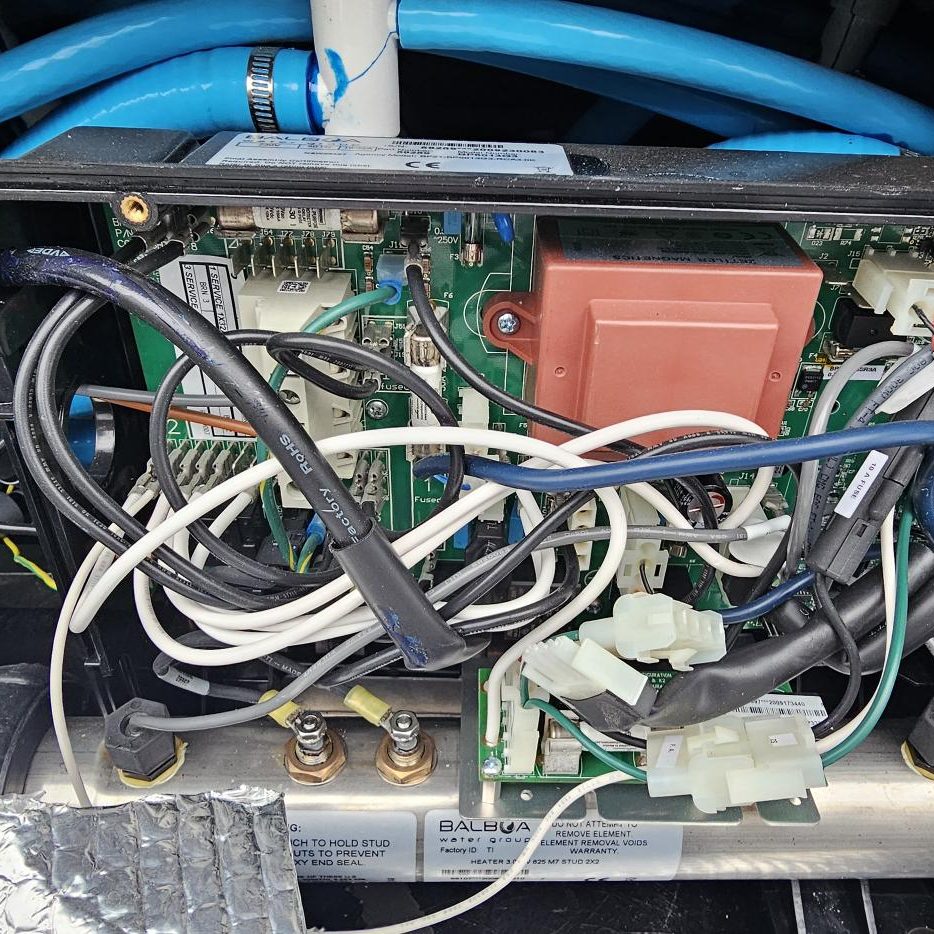
- Electrical testing, RCD checks, and earth bonding verification
- Pump or heater replacement
- Diagnosing persistent water quality issues that haven't responded to chemical adjustment
- Leak tracing
- Control board faults and software errors
The electrical work, in particular, is not an area for DIY experimentation. Hot tubs operate at 240V in an outdoor environment, and the consequences of an incorrectly wired or poorly maintained electrical system go well beyond a tripped breaker.
Preparing for Your Hot Tub Service: A Quick Checklist
Getting a little organised before an engineer visits makes the service smoother and ensures nothing gets missed.
- Note down any specific issues you've noticed since the last service — even minor ones
- Have your last water test results available if you keep them
- Ensure clear access to the pump bay and electrical supply
- Let us know your hot tub model and the approximate age - Not essential.
- If the tub has been unused for several weeks,please make sure it is full and if possible up to 30 degrees. This helps the pipe flush and Biofilm remover do its job. But if the tub is really dirty just let us know and we can sort it.
A well-briefed engineer works more efficiently, and you get a more useful report at the end.
Frequently Asked Questions: Hot Tub Service in Nottingham
How much does a hot tub service cost in Nottingham?
A professional hot tub service in Nottingham typically costs between £180 for just a clean up to a extortionate £400 in some cases, (These are not our costs but a representation of costs in the area) depending on the size of your tub, what's included, and whether any parts or additional chemical treatment are required. Always request a clear breakdown before confirming a booking.
How long does a hot tub service take?
Most routine services take between two and four hours. This usually ends up depending on water pressure out of your outside tap. If additional faults are identified — such as a pump showing early signs of wear — allow a little longer.
Do I need to drain my hot tub before a service?
At Hot Tub Services East Midlands we want the hot tub full if possible. A full drain and refill is often the most efficient solution, our engineers include this as standard. We want the tub full to test and also very important, to put a biofilm remover and flush through. Remeber most flushes will advice they help remove biofilm. Our unique dual attack flush solution kills biofilm and flushses the pipes through. We do the job properly to our high standards.
Can I get my hot tub serviced in winter?
Yes — and in fact, a pre-winter service is excellent practice. Ensuring everything is in good condition before the colder months means your tub heats efficiently when you're using it most, and avoids the risk of faults during periods when call-out times may be longer.
What's the difference between a service and a repair?
A service is a planned, preventative inspection covering all systems. A repair is reactive — responding to a specific fault. Regular servicing significantly reduces the need for emergency repairs, and often identifies small faults that would otherwise become expensive failures.
Is a hot tub service covered by warranty?
Most manufacturers require evidence of regular professional servicing to maintain warranty validity. Keep a record of every service visit, including what was checked and adjusted.
How do I find a reliable hot tub engineer near me in Nottingham?
When spa owners start experiencing issues, they often search online for “hot tub service near me.”
Local technicians provide several advantages.
They can:
Respond quickly to issues
Provide on-site diagnostics
Offer ongoing maintenance plans
Understand regional water conditions
Having a trusted local professional ensures help is available whenever your spa needs attention.
Why You Should Use Hot Tub Services East Midlands
A hot tub is one of those purchases that rewards proper care and punishes neglect. The difference between a spa that runs smoothly for fifteen years and one that causes recurring problems — high running costs, poor water quality, expensive repairs — often comes down to the quality and consistency of its maintenance.
Hot Tub Services East Midlands engineers have real experience, understand what the service covers, and build it into your regular routine. Everything else follows from that.
If you're based in or around Nottingham and want a service from a team that covers the full East Midlands area with a genuinely thorough approach, Hot Tub Services East Midlands offers transparent pricing and experienced local engineers who treat every job as if it's their own tub.
Hot Tub Servicing Across Nottinghamshire
We provide hot tub servicing across Nottingham and surrounding areas including:
• West Bridgford
• Beeston
• Arnold
• Hucknall
• Mansfield
• Newark
• Long Eaton
• Ilkeston
• Southwell
• Bingham
If you're searching for “hot tub service near me” in Nottinghamshire, Hot Tub Services East Midlands are the company for you.
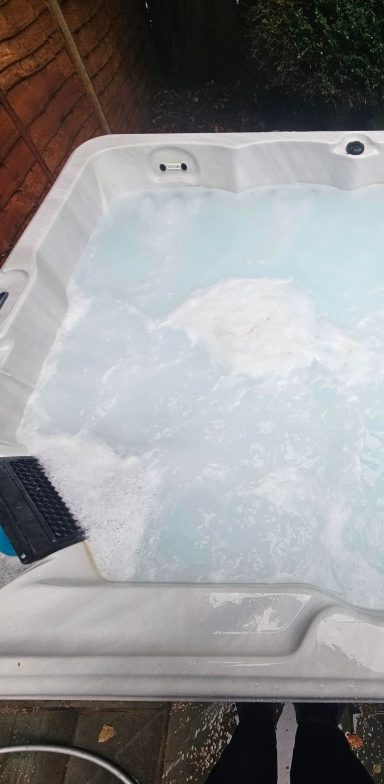
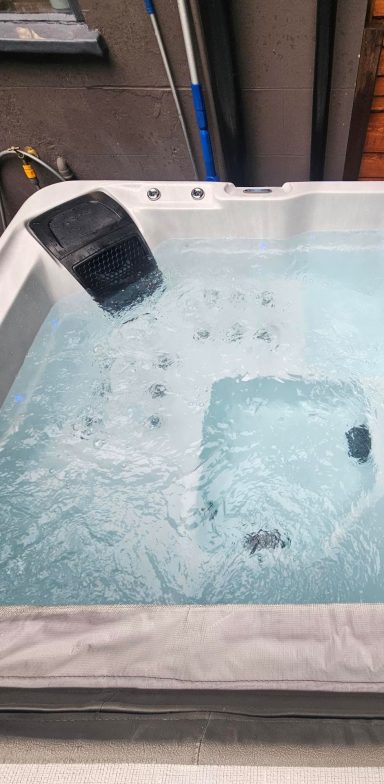
A customer in Edwalton requested a full hot tub service because the water would not balance correctly. You can see from the before picture the dirt around the filter housing and in the middle that our flush brought out. This unseen grime in the pipes would be causing the balance of the water to be constantly wrong. Also this would eat your sanitiser at a rapid level. The after photo shows the difference a full service can make to water quality.